As The New School’s 2026 class of College of Performing Arts graduates enters the workforce and we face the beginning of a new school year, we are reminded of what our students will take into the world. Viola Spolin, one of the great acting teachers of the 20th century, put it simply: “being part of the whole generates trust and frees the player for playing, the many then acting as one.”
That lesson — how to genuinely inhabit a shared world with others — has never felt more urgent.
Our nation is divided on everything from food safety to our country’s future, and there are numbers to back this schism. Half of Americans report feeling divided from one another; a recent Stanford study gives this fracture a sharper name: the “empathy perception gap.” People have not stopped caring about others, but they believe that no one else does. This misperception carries profound consequences and is currently rippling through our world, eroding trust, deepening isolation and creating a social environment in which empathy is swiftly becoming an atrophied muscle in desperate need of exercise.
We are living through a crisis of empathy and, more precisely, of empathy not being learned. We live saturated in opinion, reaction and digital noise, a culture that turns other people into content: flattened, accelerated, easy to dismiss. We’re quick to cut off those we disagree with, and the conditions that might allow for empathy to flourish — time, attention, presence and vulnerability — are increasingly scarce. Empathy becomes something we endorse in principle but rarely practice. There is one place, however, where these conditions not only still exist, but are required: the stage.
Actors, musicians and performers train to inhabit perspectives not their own, to remain present through discomfort, and to sustain attention across time. In rehearsal and performance, they develop the capacity to hold another’s reality without collapsing it into their own. Crucially, they do so in the presence of others — before audiences who are themselves engaged in the rare act of collective attention.
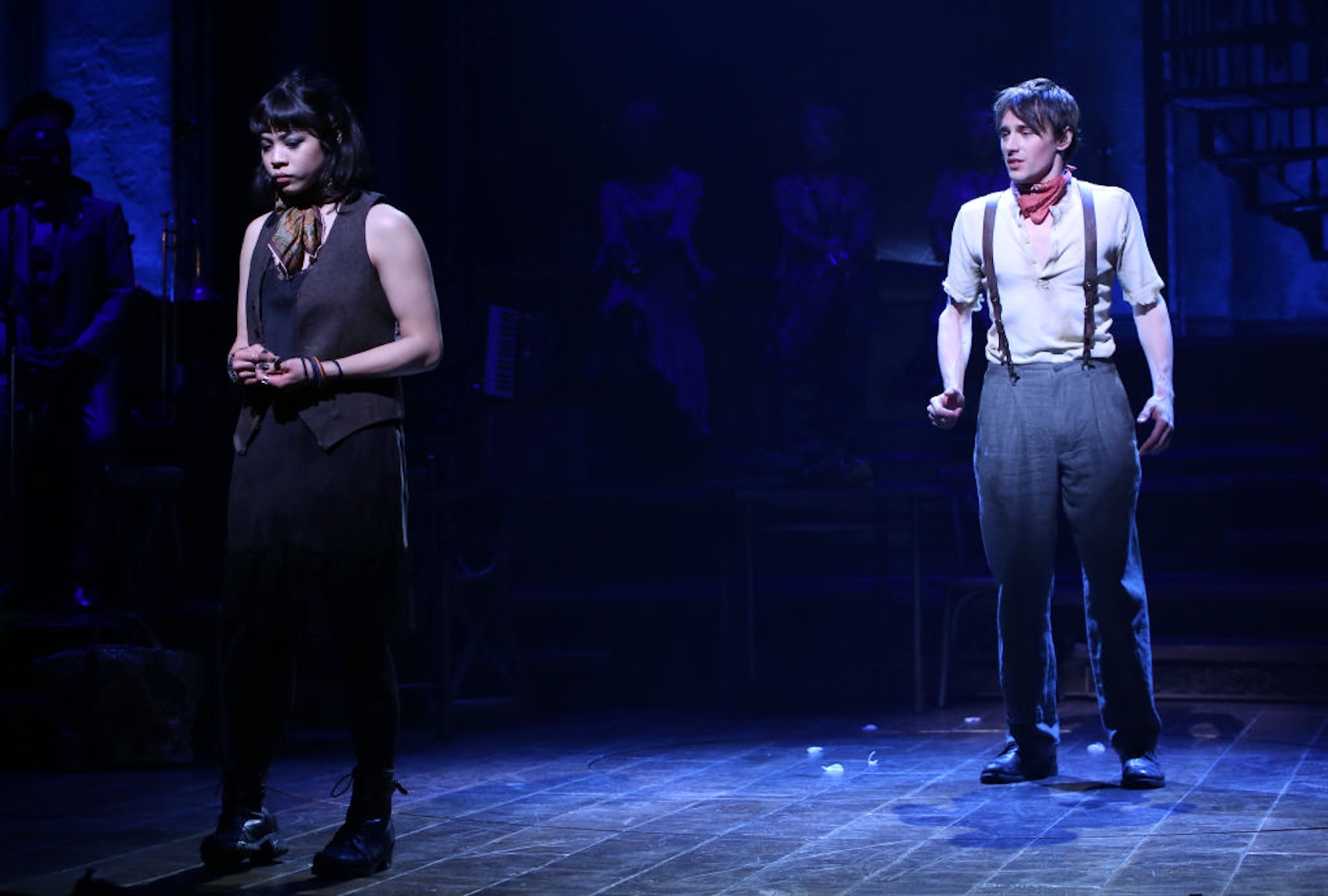
Empathy, on stage, becomes a cornerstone of experiencing live performance that pulls heartstrings, inspires raucous laughter or elicits a collective groan when a poorly-hatched plan falters. For example, in “Hadestown,” the moment Hades allows Orpheus to lead Eurydice back to the land of the living on one impossible condition — he can’t look back to make sure she’s there — converts a moment of positive surprise when the song lands into a dark swell of tension, anxiety and doom. It’s felt between the actors on stage and from the orchestra pit to the last row of balcony seats.
What the ancients understood, and what remains true now, is that empathy can be taught through the sustained act of attending to another’s experience in the presence of others.
Of course, this is not a new function of the stage. When audiences gathered in ancient Athens to watch plays by Sophocles, they were confronting a shared reality together. Theater operated as a civic technology, a structured environment in which a society could examine itself in public. What the ancients understood, and what remains true now, is that empathy can be taught through the sustained act of attending to another’s experience in the presence of others.
The stage has always taught this, and the evidence of its impact is no longer anecdotal. Participation in the arts has been shown to reduce isolation, improve mental health and strengthen social bonds.
Broadway is home to several plays that address these issues head-on while bringing deeply human experiences to life in creative, even comedic ways. For example, in “Every Brilliant Thing,” the lone person on stage, played by Daniel Radcliffe, is tasked with cheering up a deeply depressed mom by making a list of things that make life worth living. The answer: bring the second cast member — the theater audience — into the brainstorming session to help them understand and connect more deeply to the very human situation the main character finds himself in.
Programs in social prescribing — the act of doctors prescribing non-medical care — are now expanding from their origins in the United Kingdom to states like Massachusetts and New Jersey — recognize that engagement in shared cultural activity can be a meaningful complement to clinical care. Medical schools, too, have long incorporated the study of performance to develop empathy and observational acuity in future doctors. These practices point to something central: The ability to encounter another person’s experience with care and attention is a skill, and it can be taught.
That skill is cultivated through education in the performing arts. Actors and musicians learn to exist and create out of tension without rushing to resolve it. They learn to inhabit perspectives that are not their own, and to recognize the humanity within them. They practice sustaining tension, navigating uncertainty and responding in real-time to others.
Playwrights from Shakespeare to Sondheim to Manuel-Miranda, meanwhile, write around human emotion and almost weaponize relatability to enrich the audience’s theater experience. But it’s the actors who execute their vision by playing off of each other and leaning into creative impulse when the scripted scene or real-time audience reaction calls for it.
The ability to hold another person’s reality alongside one’s own, without reducing it or rewriting it, requires training, repetition and exposure. Studies have even shown that inhabiting a character increases one’s ability to see from others’ perspectives. And crucially, they do so in the presence of others—before audiences who are themselves engaged in the rare act of collective attention.
Our Summer sale is on!
At its best, the performing arts create a space for shared witnessing. Audiences experience a story alongside others, in real time, aware of each other’s presence. Faces clench before pivotal moments of conflict on stage. Eyes tear up when unrequited love leads to isolation or forbidden love leads to death. Our bodies experience excitement and anticipation when hearing musical tension or suspension. Outside the theatre, this collective attention is increasingly rare and necessary. In a society shaped by fragmentation and misperception, the capacity to remain present with complexity is one of the most urgent skills we can cultivate.
A performing arts education does more than train artists to perform. It prepares individuals — actors as well as audience members — to live with tension rather than flee from it, to participate in spaces of collective witnessing and to build communities grounded in attention, responsiveness and critical reflection. It offers a structured, repeatable method for developing empathy as a lived, practiced capacity. At a time when our social contract with each other is fraying, and we speak to Claude or ChatGPT as much as we chat with friends or family, we need more spaces where this work can happen, and more people trained to do it.
The stage is one of the last places where we learn, together, how to be with one another. It may be the most important classroom we have left.