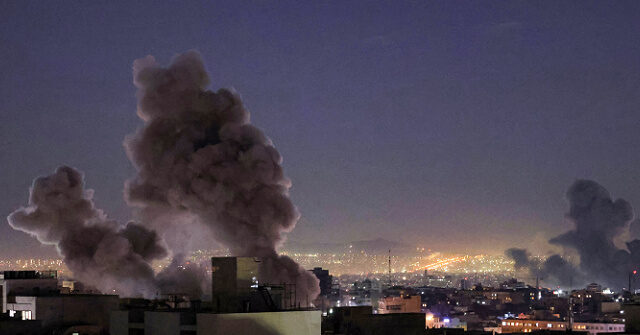
The United Arab Emirates (UAE) carried out dozens of coordinated airstrikes against Iran alongside the United States and Israel during the conflict with Tehran — including strikes on strategic energy and military infrastructure that reportedly continued even after the April ceasefire announcement — according to a report published Friday.
The Wall Street Journal, citing people familiar with the matter, reported the Emirati role in the campaign was far deeper than previously publicly known, with Abu Dhabi allegedly launching attacks from the opening days of the conflict while coordinating closely with Washington and Jerusalem, both of which reportedly provided intelligence support for the operations.
Among the targets reportedly struck by the UAE were Qeshm and Abu Musa islands in the Strait of Hormuz, Bandar Abbas, the Lavan Island oil refinery in the Persian Gulf, and the Asaluyeh petrochemical complex, the report said.
The Journal reported that the strike on the Asaluyeh energy hub was carried out jointly with Israel and triggered significant international backlash at the time, prompting the United States to pressure Israel to halt further attacks on Iranian energy infrastructure amid fears of broader regional escalation.
The report is particularly notable because Israeli officials publicly took sole responsibility for the strike at the time. When asked about the attack, Israeli Prime Minister Benjamin Netanyahu told reporters that “Israel acted alone against the Asaluyeh gas compound.”
According to the report, some of the Emirati strikes targeted Iranian energy facilities in response to Tehran’s attacks on UAE oil and gas infrastructure during the conflict.
Iran reportedly launched more than 2,800 missiles and drones at the UAE — more than at any other country, including Israel — targeting airports, energy infrastructure, ports, and civilian areas as Tehran sought to pressure U.S.-aligned Gulf states amid the regional escalation.
The Journal reported that the scale of the Emirati response exposed widening divisions inside the Gulf bloc, with Saudi Arabia privately complaining to Washington in early April that the UAE’s operations risked triggering broader Iranian retaliation against regional energy infrastructure and global oil markets.
Saudi officials reportedly pushed the United States to pressure Abu Dhabi to halt retaliatory operations and instead support regional diplomatic efforts aimed at de-escalation.
The report further said UAE President Sheikh Mohammed bin Zayed Al Nahyan became frustrated with Saudi Crown Prince Mohammed bin Salman after Riyadh declined to participate in coordinated military action against Iran.
The revelations also underscore the rapidly deepening military and intelligence coordination between Israel and the UAE during the conflict under the framework of the Abraham Accords brokered by President Donald Trump in 2020.
Last month, Breitbart News reported that Israel quietly deployed Iron Dome batteries, interceptors, and dozens of IDF personnel to the UAE following direct coordination between Israeli Prime Minister Benjamin Netanyahu and bin Zayed as Iran unleashed sustained missile and drone barrages targeting Emirati civilian areas, airports, ports, and energy infrastructure.
The deployment marked the first operational use of the Iron Dome system abroad outside Israel and the United States, with Israeli troops operating on Emirati soil and helping intercept incoming Iranian missiles and drones targeting the Gulf state.
The Journal further reported that top Israeli officials — including Netanyahu, Mossad Director David Barnea, Shin Bet chief David Zini, and IDF Chief of Staff Lt. Gen. Eyal Zamir — visited the UAE during the conflict as coordination between the countries intensified.
Responding to the report, the UAE Foreign Ministry said Iran bore “full responsibility” for the attacks and their consequences.
Joshua Klein is a reporter for Breitbart News. Email him at jklein@breitbart.com. Follow him on Twitter @JoshuaKlein.